Gdynia's waterfront has witnessed some of the most dramatic chapters in Baltic history. As one of the most important naval ports in Europe during the Second World War, the city, then known by its German name Gotenhafen, became a centre for submarine operations, military training and large-scale evacuations during the final months of the conflict.
It is perhaps no surprise that such a setting has given rise to stories that have endured for generations. Among the most persistent is the legend of a mysterious German U-boat that is said to have left Gdynia carrying secret cargo, only to disappear without trace.
For decades, the tale has inspired historians, divers, treasure hunters and documentary makers alike. While elements of the story are rooted in genuine historical events, modern research paints a far more complex picture than the legends often suggest.
A City at the Heart of Germany's U-Boat Operations
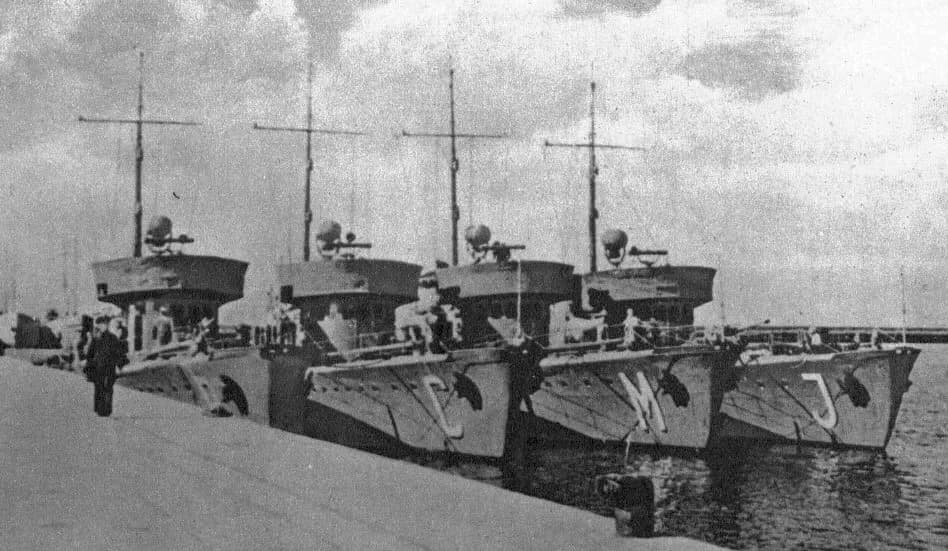
Following the German occupation of Poland in 1939, Gdynia was renamed Gotenhafen and transformed into one of the Kriegsmarine's principal naval bases. The sheltered waters of the Baltic Sea provided ideal conditions for training submarine crews before they were deployed on combat patrols in the Atlantic.
Thousands of submariners passed through the port, with the 27th U-Boat Flotilla using Gotenhafen primarily as a training base. Newly commissioned crews learned navigation, torpedo attacks and emergency procedures before heading into increasingly dangerous waters.
By early 1945, however, the strategic situation had changed dramatically. As Soviet forces advanced towards the Baltic coast, Gotenhafen became one of Germany's last remaining naval strongholds and a key departure point for military units and civilians attempting to escape westwards.
It was amid this chaos that the foundations of the U-boat legend were laid.
The Birth of a Mystery
The final weeks of the war were marked by confusion, hurried departures and the destruction of military records. Many documents were deliberately burned to prevent them from falling into enemy hands, while others were simply lost amid the collapse of the German war effort.
Some submarines left Gotenhafen and never returned. Others were sunk by mines or Allied forces before complete records of their movements could be preserved.
These gaps in the historical record encouraged speculation. Over time, stories emerged claiming that certain submarines had sailed under unusual secrecy, loaded with mysterious cargo and protected by heavily guarded dockside operations.
Although these accounts have become part of local folklore, historians have found little documentary evidence to support them.
The Treasure Beneath the Waves?
The legend has evolved considerably over the decades, with different versions claiming the submarine carried vastly different cargoes.
Among the most enduring theories are:
- Gold bars and valuables from the Reichsbank
- Looted jewellery and works of art
- Components of the missing Amber Room
- Advanced military technology and classified research
- Secret wartime documents
- Senior Nazi officials attempting to escape Europe
These claims often borrow elements from other well-known wartime mysteries, including stories surrounding the Amber Room and various alleged Nazi treasure caches across Europe.
Despite their popularity, none of these theories has been supported by verified archival evidence.
What Evidence Exists?
Supporters of the legend frequently point to eyewitness accounts from former dockworkers who claimed to have seen heavily guarded crates being loaded onto submarines during the final days of the war.
Others cite missing cargo manifests, unexplained gaps in naval records and reports of unidentified wrecks discovered in the Baltic Sea.
Taken individually, however, these pieces of evidence are far less remarkable than they first appear.
The destruction of military records was common as Germany's defeat became inevitable, while many eyewitness testimonies were collected decades after the events, making them difficult to verify independently.
Similarly, advances in underwater archaeology have shown that many so-called mystery wrecks have ultimately proved to be merchant vessels, minesweepers or submarines already documented in naval records.
What Modern Researchers Say
Today, historians specialising in the Kriegsmarine generally agree that there is no credible evidence for the existence of a "treasure submarine" that secretly departed Gdynia carrying vast riches or priceless artefacts.
Instead, they argue that the legend is the product of several genuine historical circumstances coming together:
- A major wartime submarine base
- The confusion surrounding Germany's collapse in 1945
- Destroyed or incomplete military records
- Cold War restrictions on access to naval facilities
- The enduring fascination with Nazi treasure stories
Modern maritime archaeology has further reduced the scope for speculation. Improved sonar technology, remotely operated vehicles and international research projects have identified many previously unknown wrecks throughout the Baltic, leaving fewer mysteries than once existed.
Other U-Boat Stories Connected to Gdynia
The treasure legend is only one of several submarine stories associated with Gdynia's coastline.
Local folklore also includes tales of hidden submarine pens concealed beneath the harbour, sealed wartime tunnels linking military installations and unidentified submarines resting undiscovered on the seabed. While these stories continue to capture the imagination, none have been conclusively proven.
One real incident often linked with local legend is the fate of the German submarine U-2331, which sank during a training exercise near the Hel Peninsula in October 1944, most likely following a diving accident. Unlike many of the mythical stories, this submarine was later recovered and brought back to Gdynia before being deemed beyond repair and scrapped.
Ironically, Gdynia's most celebrated submarine story belongs not to Germany but to Poland. The Polish submarine ORP Orzeł was welcomed into Gdynia in 1939 before embarking on one of the most remarkable wartime escape stories in naval history. After evading internment in Estonia, she reached Britain and continued fighting alongside the Royal Navy before disappearing on patrol in 1940. Her fate remains one of Poland's greatest maritime mysteries.
A Legend That Refuses to Sink
The Gdynia U-boat legend endures because it is built upon a backdrop of real history. The city's wartime importance, the dramatic final months of the Second World War and the secrecy that surrounded military activity for decades all provide fertile ground for speculation.
Although modern research has found no convincing evidence that a submarine carrying hidden treasure ever slipped away from Gdynia, the story continues to form part of the city's rich maritime heritage. It serves as a reminder that history is often shaped not only by documented events but also by the stories communities choose to remember, question and retell.