Before Gdynia became a modern port city, it was a fishing village; its Motor Museum tells the story of what happened when the two worlds collided.
There are museums where history is presented through photographs, documents and carefully preserved objects. At the Gdynia Motor Museum, history also has an engine, four wheels and, in many cases, the ability to start.
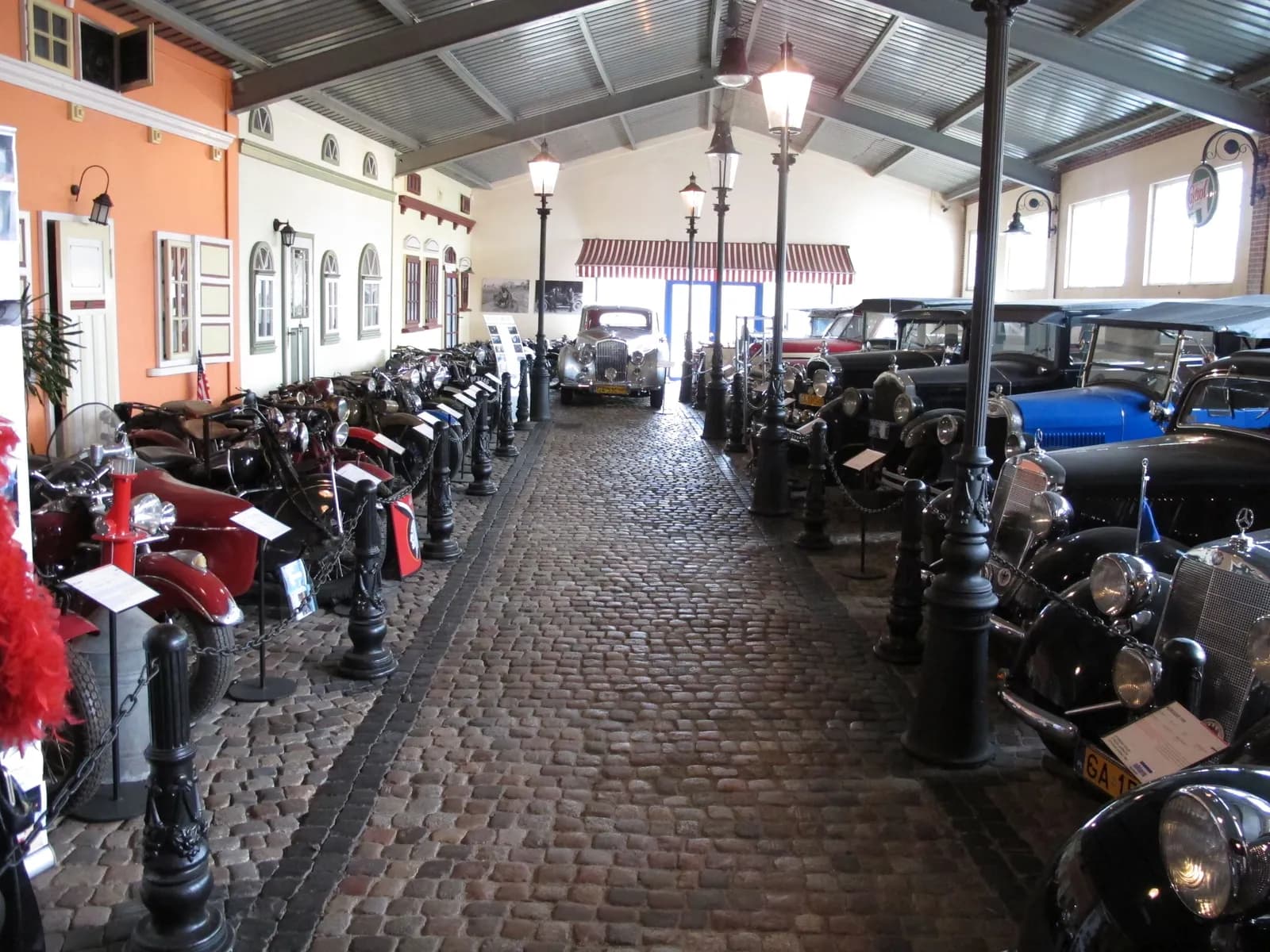
In Gdynia's Cisowa district, a modest exhibition hall houses a collection of vintage cars and motorcycles that spans much of the 20th century. The vehicles are displayed along a recreated cobbled street inspired by the 1920s, complete with façades, shopfronts, signs and architectural details taken from genuine interwar buildings in Gdynia and Gdańsk. The effect is less like walking through a conventional exhibition and more like entering a small fragment of the city at another point in time.
That setting matters because Gdynia itself was undergoing a remarkable transformation when many of these machines first appeared on Polish roads.
A city growing at the same speed as the automobile
At the beginning of the 1920s, Gdynia was still a relatively small Baltic settlement. Within little more than a decade, it had become one of Poland's most important ports and a symbol of the country's ambitions as an independent maritime state.
The automobile became part of that transformation. New roads and wider thoroughfares accompanied the growth of the city, while taxis, buses and private cars increasingly formed part of everyday urban life.
According to the museum's historical account, Gdynia's first petrol station opened in 1926, while dealerships representing brands including Mercedes, Fiat and Chevrolet appeared in the expanding city. Ford also established its Polish representative office there. Before the Second World War, Gdynia had more than 100 registered taxis and a higher number of cars per 10,000 residents than Warsaw.
The city's port gave this development an international dimension. New vehicles arriving from abroad could be unloaded at Gdynia and distributed onwards into Poland, making the young city a point of contact between international motoring and a rapidly modernising country.
The connection continued into the post-war period. Kościuszki Square became a venue for motor rallies, while a qualifying race for the Polish Automobile Championship in 1957 reportedly drew more than 40,000 spectators.
Seen in that context, the museum's location begins to feel less coincidental. Gdynia was a city associated with movement, modernity and connections with the wider world long before those qualities became part of its contemporary identity.
The machines are part of the story
The museum's collection includes vehicles such as a 1926 Ford Model T, a 1925 Buick Master Six, a 1931 Buick Deluxe, a 1927 Adler Favorit, a 1928 Plymouth Q Four Door and several Mercedes models from the 1920s to the 1950s. There is also a 1938 Fiat 500, a 1946 Ford V8 Super Deluxe and a 1950 Bentley MK6.
What distinguishes the collection is not simply the age of the vehicles. The museum states that its exhibits retain their genuine components and that the vehicles are maintained in working order. Some still appear at parades, cultural events and film productions, meaning that they remain functioning machines rather than objects permanently separated from the world for which they were built.
That philosophy is closely connected with the museum's origins. Its founder, Witold Ciążkowski, began collecting vehicles before eventually creating the museum himself. According to his account published by the museum, the collection outgrew ordinary garage space and years of effort were required to establish a permanent exhibition hall. The emphasis on authentic components became a defining principle of the collection.
The museum's current exhibition represents less than half of its total collection because of the limitations of the present building. The institution says that plans are underway to move to a larger premises in central Gdynia, which could eventually allow more of the collection to be displayed.
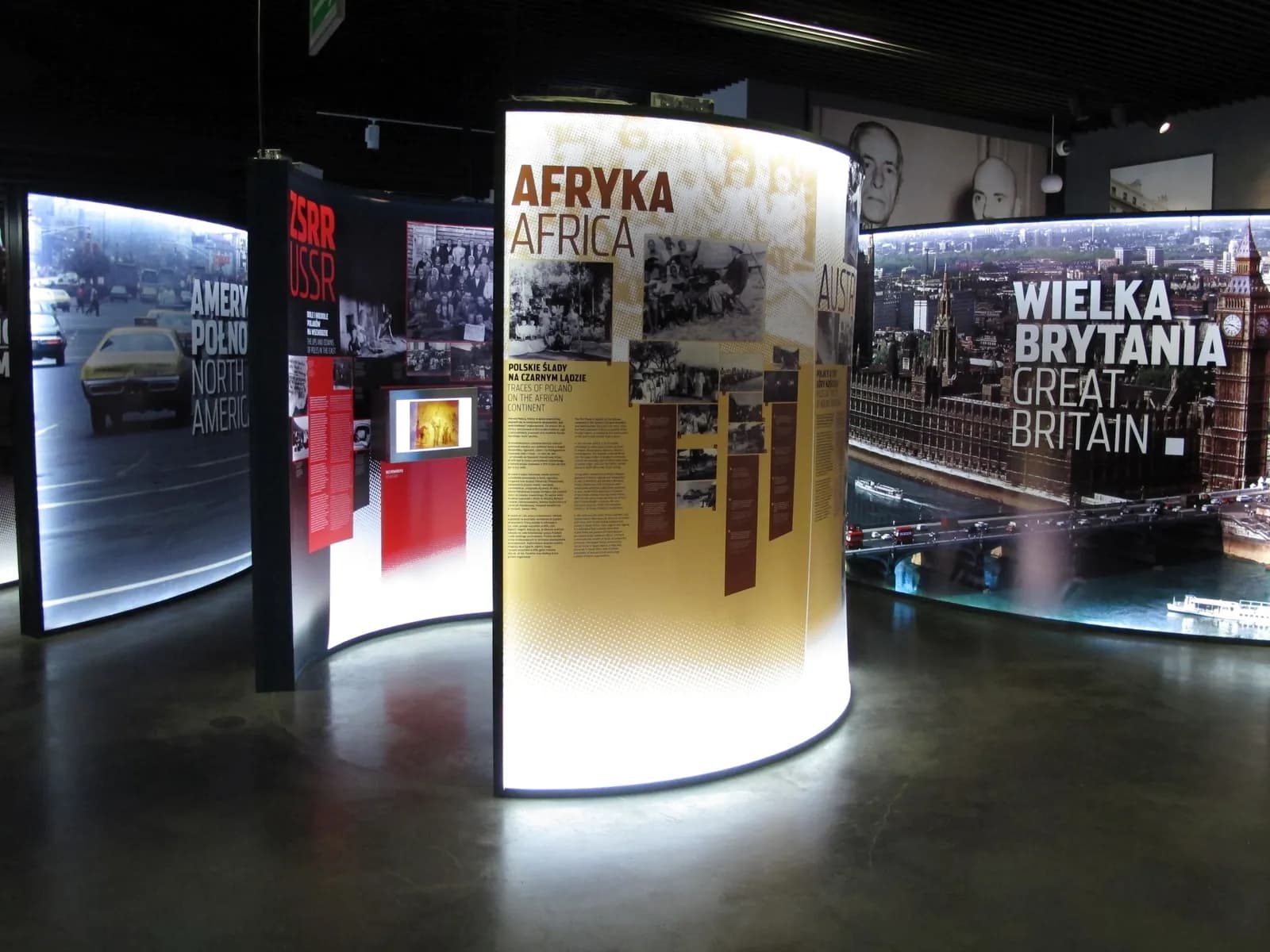
There is another layer to the exhibition beyond the vehicles themselves. Archival photographs, technical diagrams and historic road maps help place the machines within the world that produced them. A vintage-style café on the mezzanine continues that atmosphere, turning what could have been a conventional vehicle collection into a reconstruction of an era.
A museum shaped by Gdynia's own character
Perhaps the most compelling reason to visit is that the museum is not really telling a generic history of the automobile.
It is telling that history through Gdynia.
The Ford Model T and the Mercedes saloons are part of an international story, but their presence resonates differently in a city whose growth was so closely connected to transport, trade and mobility. The recreated street outside the vehicles reinforces that connection, placing the machines within an imagined version of the urban environment in which such cars might once have been seen.
That also explains why the museum can appeal beyond dedicated motoring enthusiasts. Someone interested in Gdynia's architecture, interwar history or social development can find another route into the city's past through the collection.
The cars are, in effect, historical witnesses. Their designs reveal changing ideas about comfort, speed and status; their origins point towards international trade; and their presence in Gdynia reflects a city adapting quickly to modern life.
A century after Gdynia began its extraordinary transformation, the Motor Museum preserves some of the machines that accompanied it. They may no longer dominate the city's streets, but behind the museum's reconstructed façades they continue to tell a story about a place that was, from the beginning, built around movement.
Visitor Information
Museum: Gdynia Motor Museum
Address: ul. Żwirowa 2C, 81-010 Gdynia, Cisowa
Opening hours: Monday–Saturday, 09:00–17:00
Admission:
Standard: PLN 20
Reduced: PLN 15 for children aged 15 and under
The museum states that exhibits are described with technical information and additional details about the individual models. An optional guided tour is also available. Group visits can be arranged in advance.